
The Cracks Beneath Us
There are certain phone calls that stay with you—not for what was said, but for what trembled beneath it. The quiet between words, the breath you hear when someone on the other end realizes she’s touched a nerve. Nashville, years ago: the air was thick with summer and resignation. I had called the Rape and Sexual Abuse Center because someone I barely knew—a distant relative by marriage, a man with the sort of ordinary charm that fools neighbors—was hurting two children. Everyone around him seemed to know and no one seemed to care.
It wasn’t my business, they said. It wasn’t my problem.
But silence is a language, and I had learned it too well.
The woman on the phone was patient. She spoke the way nurses do when they know you’re bleeding but you haven’t noticed yet. She gave me advice, told me who to call, what to do. Then she asked, almost as an afterthought, if I’d ever gotten help for what had happened to me.
“No,” I said. “I’m fine. It’s no big deal.”
It was the biggest lie I’d ever told, and I told it easily.
I. The Inheritance of Damage
There’s a particular kind of rage that doesn’t look like rage at all. It looks like exhaustion, like detachment, like the inability to finish a sentence without feeling the walls closing in. It’s the rage of a boy who never had a chance to fight back, who learned too early that safety was an illusion.
Child sexual abuse does not end with the act itself. It lingers, shape-shifting through decades, finding new disguises. It becomes the drink you pour at the end of the day, the job you quit before they can fire you, the marriage that cracks under the weight of secrets.
It becomes the father you never learned how to be.
In the years after that phone call, I began to notice a pattern—not only in myself, but in every man who had been broken in the same way. I joined a therapy group for male survivors. We were all different—black and white, rich and poor, ministers and musicians, construction workers and accountants—but the stories were nearly identical once you stripped away the details.
Different predators. Same consequences.
One by one, we went around the circle and confessed the ways our lives had fallen apart. Addictions. Arrests. Divorces. Estranged children. Sleeplessness. That chronic restlessness that no vacation could fix.
What shocked me most was not the pain itself but the symmetry of it. As though the same invisible hand had traced the same ruin across each of our lives.
II. The Pattern
It begins, usually, with silence. The boy tells no one, or tells and is not believed. Either way, the result is the same: the world cannot be trusted.
Then comes the shame. Shame becomes the architecture of his life—the thing he builds everything else around. He learns to smile on command, to laugh at the right times. He becomes charming because charm is camouflage.
He grows up, but the boy inside him does not. The boy waits, terrified, beneath the man’s skin, watching for danger that never ends.
He drinks. He works too much. He falls in love and then sabotages it. He tells himself he’s fine. He becomes reckless, or rigid, or both. He mistakes control for safety, sex for connection, anger for strength.
He is the boy, still running from the room where it happened.
III. What It Does to a Life
Joan Didion once wrote that we are well advised to keep on nodding terms with the people we used to be, lest they come hammering on the door at four in the morning. I know that boy. He has never stopped knocking.
When I was young, I believed adulthood would make sense of it all—that jobs and bills and fatherhood would overwrite the damage. But trauma is not overwritten; it is archived. It lives in the nervous system, in the startle reflex, in the sudden sweat of panic during an ordinary argument.
The science bears this out: trauma reshapes the brain’s architecture, dulls the hippocampus, overcharges the amygdala. The body remembers what the mind denies.
For men, it often manifests as anger because anger is the only emotion we’re permitted to express without ridicule. But beneath that anger lives terror—the terror of being powerless again. So we learn to dominate before we can be dominated. We overcompensate. We control. We lose ourselves.
The statistics are merciless: male survivors are exponentially more likely to develop addictions, to attempt suicide, to struggle with intimacy, to commit crimes of self-destruction. But statistics do not tell the story of what it feels like to wake up every morning in a body you distrust.
I carried that body into every room I entered. Into my marriage. Into fatherhood. Into work. I wanted to build a family, to prove that I could be something other than the sum of what had been done to me. But the rage leaked through the cracks. Depression took root.
You can love your wife and children and still feel like a ghost in your own home.
IV. The Silent Epidemic
What startled me in that group was not only the pain but the loneliness. Every man thought he was the only one.
We live in a culture that has no language for male victimhood. When a man says he was abused, the room goes quiet. Other men look away. Women pity him. The word victim feels wrong on his tongue. He has been trained, since birth, to be protector, not prey.
So he stays silent.
The silence kills us. It isolates us. It tells us that healing is weakness. And yet the men in that room were the bravest I have ever known. They were survivors of an unacknowledged war—one fought in bedrooms and basements, behind closed doors, across generations.
Each man’s story had its own geography, but they all led back to the same country: the kingdom of the broken.
And still, we were alive.
V. The Echoes
There are moments when the past slips through the present like a blade. A smell, a sound, a look. I once walked into my son’s room and saw him sleeping, and for a brief second I felt a kind of vertigo—love so fierce it bordered on grief. Because I knew what it meant to lose that innocence.
That’s when I realized that abuse is not just what was done to me—it’s what was stolen from me: trust, joy, the ability to believe in goodness without question.
For a long time, I confused survival with strength. But survival is not strength; it is endurance. Strength comes later, when you decide to stop running.
When I think of those men now, I remember their faces the way Fitzgerald might describe a ruined city—once bright, now faded, but still standing in the morning light. We were wreckage that had chosen to rebuild.
VI. How Boys Become Men, and Men Become Ghosts
It’s tempting to think the damage ends with us, that it can be contained. But trauma has a way of leaking forward. A boy hurt in silence grows into a man who cannot speak. A man who cannot speak becomes a father who cannot listen.
We pass down what we refuse to face.
Some of us become abusers ourselves. Others become protectors to the point of obsession, unable to rest, haunted by the fear that someone will hurt the people we love. Both are symptoms of the same wound.
The irony is that the abused boy often becomes a man who overperforms masculinity—loud, aggressive, invulnerable—because vulnerability feels like death. The world rewards him for this performance, even as it slowly kills him.
It’s a strange thing, to live in a culture that celebrates toughness and punishes tenderness, and then acts surprised when men implode.
VII. The Turning
The first night I spoke in that group, I couldn’t look anyone in the eye. My story came out haltingly, as if through smoke. I remember saying, “It’s no big deal,” and hearing my voice break on the word deal.
Then an older man across the room—a retired cop, of all things—said quietly, “It was a big deal.”
He said it again. “It was a big deal.”
In that moment, something shifted. It wasn’t forgiveness. It wasn’t peace. It was the smallest flicker of acknowledgment, the beginning of a new kind of truth.
Trauma isolates; honesty binds. That’s the hidden alchemy of healing.
We began, over time, to tell the truth about ourselves—not the heroic versions, but the broken ones. We talked about the nights we almost ended it. The mornings we couldn’t get out of bed. The children we loved and couldn’t reach.
And in the telling, the shame began to lose its grip.
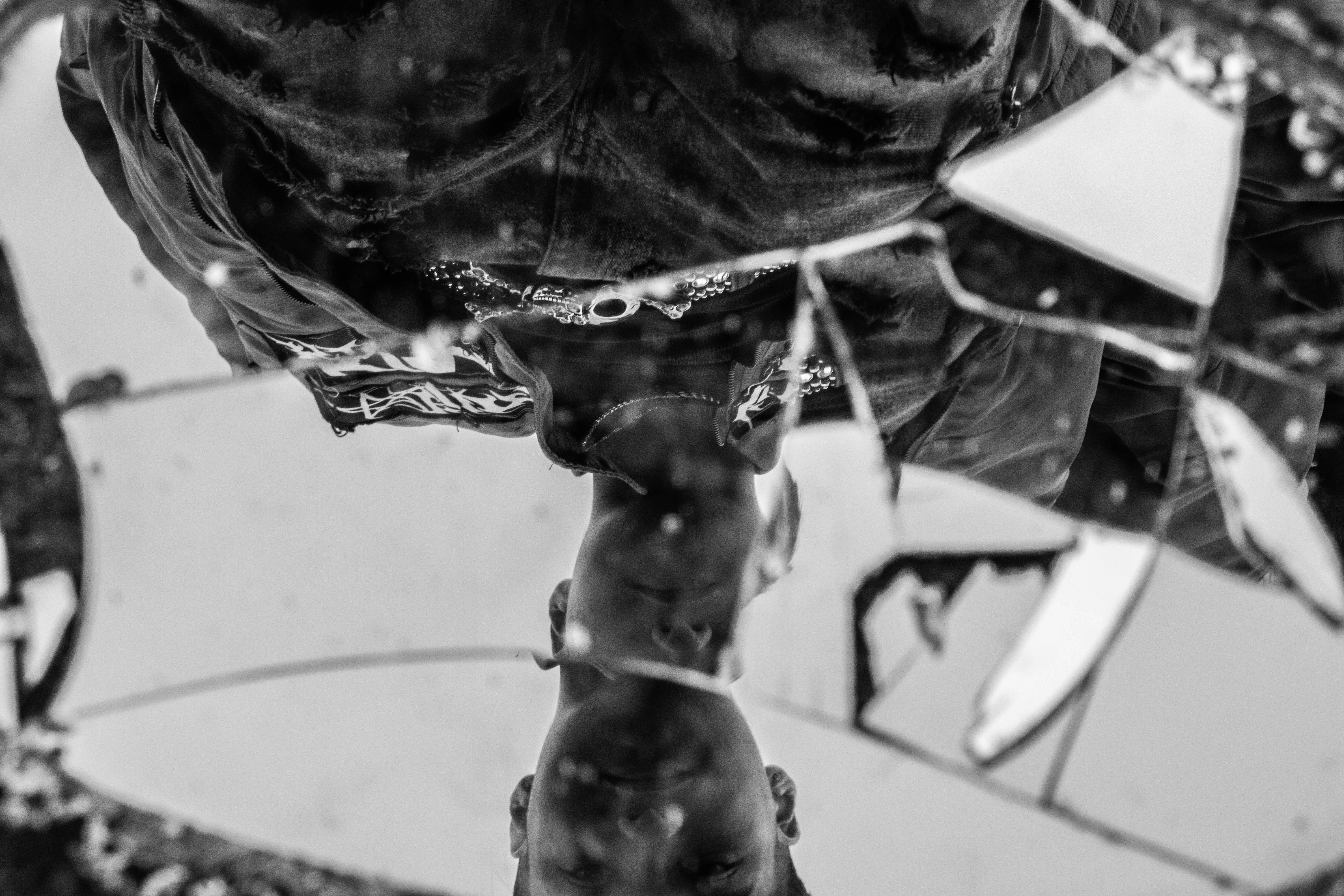
VIII. The Mirror
I think often of that Nashville summer. The way the air felt heavy with humidity and unspoken things. The way I’d walk the streets at dusk, watching the sky fade from gold to bruised purple, thinking of the man who hurt those children.
He was eventually arrested. The system, slow as it was, finally caught up to him. But the larger crime remained—the complicity of silence.
Everyone around him knew. Or should have known.
That’s the part that haunts me. Not the monster himself, but the people who looked away. Because every act of abuse requires an audience of the indifferent.
In Faulkner’s world, sin and silence are communal. The whole town bears the stain. In my own life, I see how that truth unfolds. We inherit the sins we ignore.
IX. The Work of Repair
Healing, I’ve learned, is not linear. It’s cyclical. You move forward, then back. You make peace, then wake one night consumed by rage again.
But something changes over time: you learn to hold the pain without becoming it.
I no longer need to hide from that boy I was. I can sit with him now, quietly, the way a father might sit beside a frightened child. I can tell him that what happened was real, and that it wasn’t his fault.
There’s power in that. There’s grace.
The past is always reaching out its ghostly hand, beckoning us back. I’ve stopped trying to outrun it. The past will always be there, but it no longer drives the car.
X. The Men I’ve Known
Every few years, I meet another man who carries that same look—the one I saw in the group: wary, hollow, half-present. You learn to recognize it.
Sometimes it’s a friend who drinks too much. Sometimes it’s a coworker who can’t stop working. Sometimes it’s a stranger who confesses, in a bar, something he’s never said aloud.
Within fifteen minutes, I can usually tell. There’s a cadence to the conversation, a certain defensiveness followed by exhaustion. You ask about his childhood, and his eyes flicker—just a second too long—before he changes the subject.
These men are everywhere. They mow lawns and run companies and preach sermons. They hold their children and wonder if they’re doing it right.
They are not monsters. They are men trying to live with ghosts.
XI. What We Lose, What We Keep
If I’ve learned anything, it’s that the true cost of abuse is not only psychological—it’s existential. It alters your relationship with the world. You begin to see everything through the lens of betrayal.
Even joy becomes suspect.
And yet, there’s a strange beauty in survival. We who have walked through that fire carry a certain clarity about life. We know what matters, and what doesn’t. We know how fragile love is, how sacred kindness can be.
I used to think my story ended with damage. Now I see it as a kind of inheritance—terrible, yes, but also instructive. It taught me to listen, to notice the silences in others, to recognize the shape of pain when I see it.
That’s why, when I meet a man in crisis, I can see it so quickly. Not because I’m wise, but because I’ve been there.
We recognize our own.
XII. The Reckoning
Joan Didion wrote that we are all on our own, that life changes in the instant. For me, that instant was not the abuse itself, but the day I stopped pretending it hadn’t shaped me.
There’s no redemption arc in this story. No tidy ending. Just the slow, deliberate work of reconstruction.
The house may be damaged beyond repair, but it can still be lived in.
I think of the men from that group sometimes. I imagine them scattered across the country, older now, quieter. Some have reconciled with their families. Some have not. Some are sober. Some still fight their demons daily.
But every one of them is still here. And that, in the end, feels like victory.
XIII. The Quiet After
The woman on the hotline probably doesn’t remember our conversation. But I do. It was the moment the story began to change.
There’s a line in Faulkner that I come back to often: The past is never dead. It’s not even past.
He was right. But what he didn’t say is that the past can be integrated. It can be folded into the story without consuming it.
I am not fine. It was a big deal. But I am still here.
And in that quiet truth, I find something that feels, at last, like grace.
That is beautiful and so important for people to read.